
Collective Risks
Welcome to Not Priced In, a newsletter about interesting stories in business and finance. Consider subscribing if you like what you see!
On Jan 10th, 2019, a bombshell dropped on social media. SnG Comedy (Short for Shits n Giggles) was breaking up. Along with AIB and EIC, SnG was one of the original comedy collectives of early Indian YouTube. Like the others, SnG started with sketches, but gradually established its niche in the group banter podcast space.
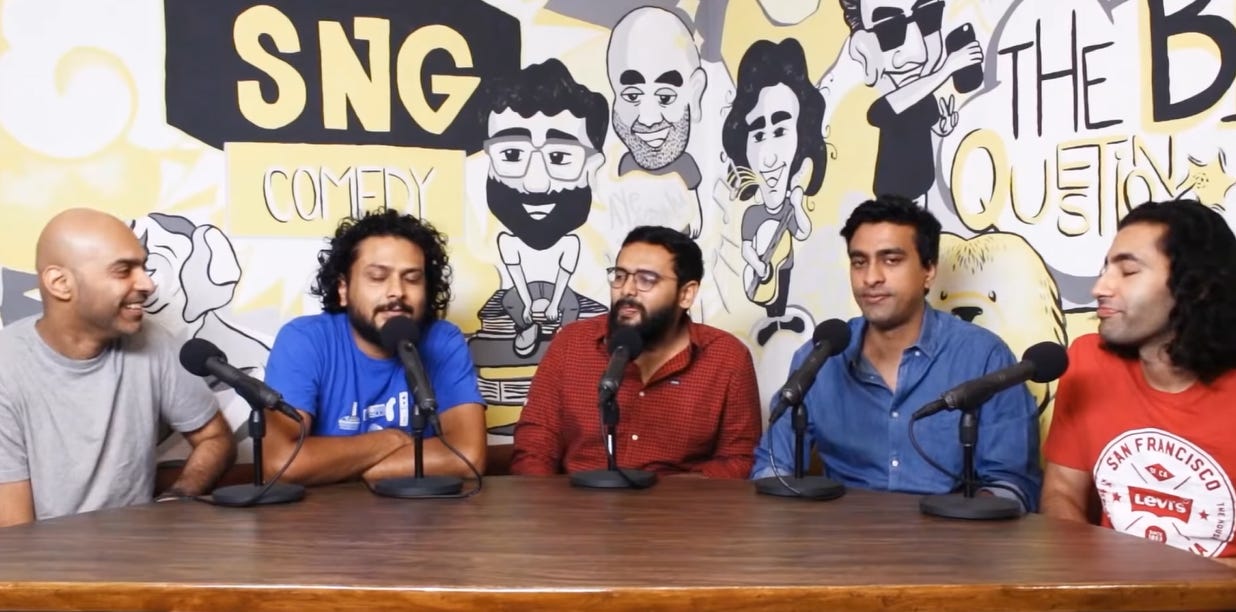
The weekly show was called The Big Question, and featured the now common format of 3 or 4 hosts and an occasional guest shooting the breeze, with a “topic” that they discussed, but not too rigidly. The vibe was that of hanging out in a café or pub with friends, except everyone here was funny. The fact that they were long time friends in real life made the chemistry feel authentic and unforced. The early stand-up scene was small, so even guests were usually good friends, and were quick to catch on to the vibe of the show.
Since personal anecdotes formed a big part of the format, the audience got to know the hosts intimately – their milestones, successes, failures were all spoken about, sometimes in detail and sometimes just in passing. Unlike a vlog though, this wasn’t voyeuristic. It organically felt like getting to know a new set of friends better with each conversation.
No wonder they had a cult following. They were never as large as All India Bakchod (AIB), but their engagement levels were through the roof. AIB’s shadow, in fact, loomed large behind the scenes.
In 2011, Karan Talwar had started a YouTube channel with a vile name I’m not going to repeat. A low-hanging-fruit connoisseur, soon “All the Sonam Kapoors and Karan Johars were following it.”. He was also writing for Johar’s TV show, Koffee With Karan, while churning out vaguely Bollywood-themed content on his channel. At one point, he had 6000 followers!
Sometime in 2013 or 2014, the collective coalesced. That’s when he changed the channel name to SnG Comedy. In my opinion, this was the original sin, and why so much drama and heartbreak followed. If he’d started a separate new channel, none of his entitlement would’ve seeped through later.
I don’t think anyone expected SnG to grow as quick and as large as it did. That’s why no one (except Talwar) rushed to hash out the legal and business aspects of the endeavour. This was a group of stand-up comics in their 20’s. They didn’t want to become a bunch of suits, and just focussed on the creation process.
At least that’s how Talwar tells it in a Deadant interview. Apparently, he had drafted up the papers to formalise things. But repeated reminders to come in and sign them went unanswered. The guys had a “lackadaisical” attitude. He went and did the obvious thing, registering the business as a partnership with his mother.
In fairness, Talwar had a point. He was probably seeing rising YouTube revenues and brand deals for the channel which was still in his name. To his credit, he was sharing revenues equally with the other four cofounders. Indian tax laws being what they are, it must’ve been a paperwork nightmare. But that was a minor problem. Like I alluded earlier, AIB and Tanmay Bhat were at their peak- churning out content, amassing followers and brand deals, just building a solid business. Talwar wanted what AIB had.
Now, his ambition wasn’t a sin, and even creative output needs formal processes to maximise value. One nuance escaped Talwar though: in all of AIB’s content, the writing and the brand was the hero. Bhat and gang built a factory of content with a keen eye for talent and a knack for knowing what would work. In terms of managing perception about itself, AIB was like a corporation, where even if you knew the key players, they always stood under AIB’s umbrella.
SnG’s image, on the other hand, was built on the talent. And the talent was well aware of it. The fact that they did podcasts, where their personalities shone through, also worked in their favour. AIB was more skewed towards skits, with a rotating cast of actors to make sure no one person became synonymous with the channel.
The SnG guys not signing agreements wasn’t laziness or a devil-may-care attitude. They knew they held the leverage, and saw no reason to give up their autonomy. They all started their own YouTube channels while still doing the weekly podcast- something that never happened with AIB until it imploded. Without a contract or non-compete, Talwar had no way of stopping them.
He overplayed his hand, and issued an ultimatum to the rest. He was frustrated with the lack of structure, formal commitments and consistency in SnG. He wanted to become the next AIB, and if these guys weren’t going to commit, he’d just have to do it without them. They demurred, and he went nuclear, handling the separation quite gracelessly- one day all the passwords were changed, and the others were locked out of the content and revenues that was rightfully theirs.
Big mistake.
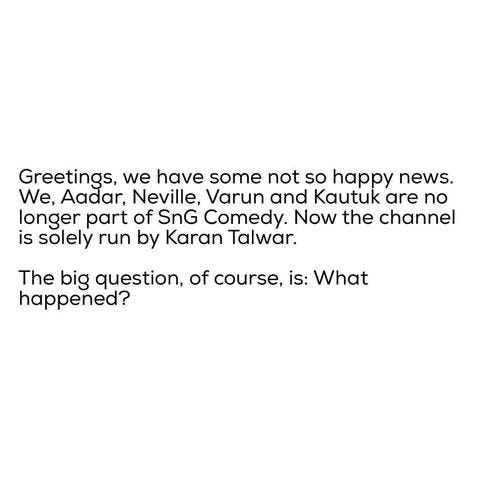
Varun Thakur’s Instagram post was clear: without mud-slinging or name-calling, he got himself and the boys a clear exit from the mess. Sure, they’d lost almost half a decade of output. But they had the audience, and their sympathies, firmly with them. Not to mention industry insiders.
On September 24, 2019, a new video dropped on Varun Thakur’s Youtube channel. It was a new podcast called The Internet Said So. And the first episode was titled “The Boys are Back.”
His channel today has 344k subscribers. And yeah, sure, SnG has 783k. But the last video posted there was on May 13,2020, and Talwar has stepped away from public life. The Internet Said So just sold out a multi-city tour of live recordings of their podcast. There is talk of an international tour soon.
With the benefit of hindsight, what are the lessons here?
In any partnership, clarify roles and responsibilities early on, when things are rosy. Formalise and document everything, for legal and tax purposes, but also to hold everyone accountable. And learn to see when something that is the centre of your existence is just a side-hustle for someone else. Both POV’s are right, and people, especially creative people, need room to evolve. Communicate expectations clearly.
Most importantly, understand leverage. It is the defining undercurrent of every business transaction. Don’t overestimate how much you bring to the table. And like I said in my Chumbak post, if you have to break up, be gracious and dignified about it. Your edgy YouTube persona doesn’t belong in the boardroom.